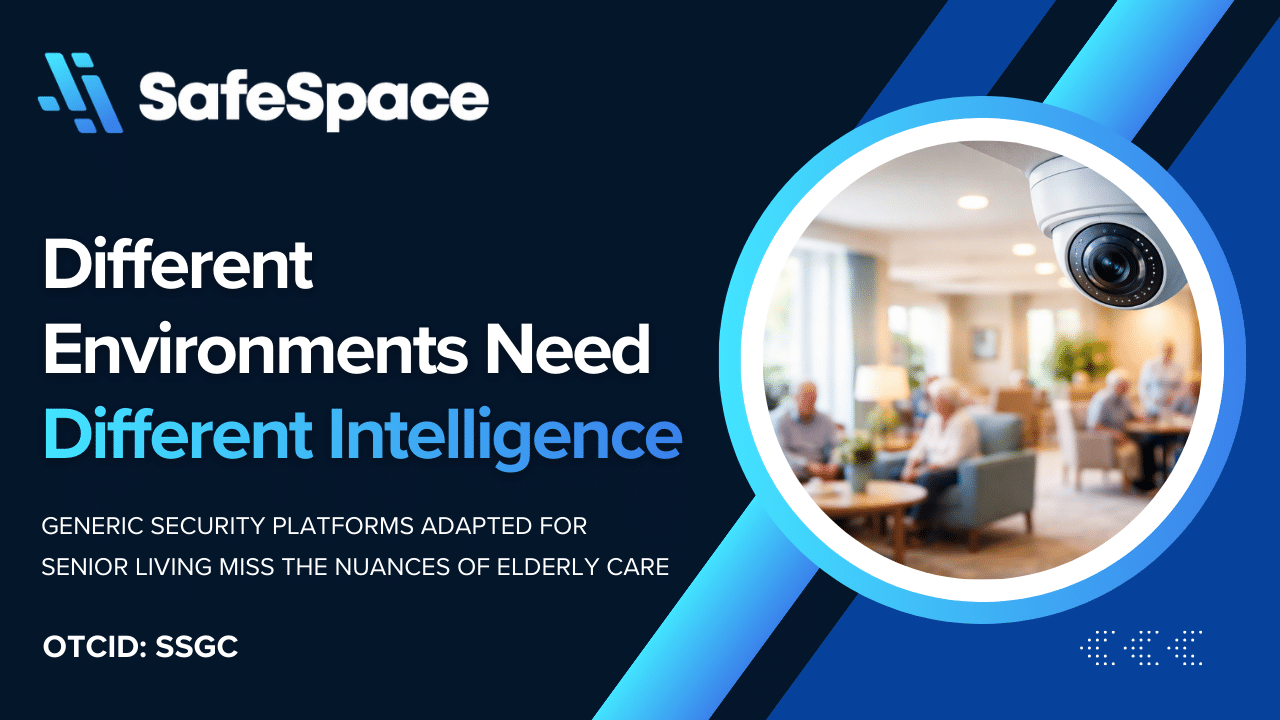
Senior Safety Requires Something Fundamentally Different
Security protects buildings. Senior safety protects people.
And those require fundamentally different technology.
For years, senior living communities have relied on traditional security systems adapted from other industries, such as retail, corporate campuses, schools, and public venues. Cameras were installed, access controls added, and monitoring protocols borrowed from environments focused on external threats.
But senior living isn’t a retail store. It isn’t a school. And it certainly isn’t a warehouse.
It’s a care environment where the greatest risks often come not from outside intruders, but from within.
That distinction changes everything.
Security vs. Senior Safety: Understanding the Difference
Traditional security systems are built to detect external threats:
- Unauthorized entry
- Suspicious objects or weapons
- Theft or vandalism
- Perimeter breaches
These are important risks, but they’re not the primary safety challenges in senior living communities.
Senior safety systems, by contrast, must recognize internal risks such as:
- Cognitive impairment behaviors like wandering or elopement
- Resident-to-resident conflicts
- Early signs of medical distress or disorientation
- Fall risks and sudden mobility changes
These aren’t security incidents, they’re care events. And they require technology that understands human vulnerability, not just intrusion detection.
Why Generic Platforms Fall Short
Many security vendors attempt to “adapt” existing platforms for senior living. But systems trained on retail theft patterns or school security scenarios lack the contextual intelligence needed for elder care.
This can lead to:
- Excess false alarms that staff begin to ignore
- Missed early warning signs of distress
- Interventions that feel intrusive rather than supportive
- Technology that conflicts with dignity-focused care models
- Technology inhibited by privacy regulations making them redundant
Ultimately, adapting a security system isn’t the same as designing a safety system.
Designed for Senior Living From Day One
SafeSpace was engineered specifically for senior living environments, not retrofitted from other industries.
That focus means the AI is trained to recognize nuances unique to aging populations, including:
Recognizing Wandering vs. Purposeful Movement
Not every late-night hallway walk is cause for alarm. SafeSpace learns behavioral patterns and flags deviations that suggest confusion or risk rather than routine activity.
Distinguishing Normal Aging From Distress
Changes in gait, posture, or pace can signal elevated fall risk or medical concerns. Context-aware monitoring helps identify subtle changes before they escalate.
Supporting Dignity-Preserving Interventions
Senior safety isn’t just about detection, it’s about response. Alerts are designed to enable supportive care interventions rather than unnecessary emergency escalation.
Privacy-First Healthcare Compliance
Healthcare environments demand strict privacy standards. SafeSpace incorporates HIPAA-conscious design principles that prioritize resident dignity while still delivering actionable safety insights.
The Future of Senior Living Safety
As resident acuity increases and staffing challenges persist, communities need tools that do more than watch, they must understand.
The shift ahead isn’t from “no security” to “more security.”
It’s from generic security to intelligent, resident-centered safety.
Technology designed for elder care recognizes that safety isn’t just about preventing incidents, it’s about preserving independence, dignity, and peace of mind for residents, families, and caregivers alike.
And that requires solutions built specifically for the realities of senior living.
Why This Matters More Than Ever
Senior living communities today face rising resident acuity, ongoing staffing challenges, and families who understandably expect both independence and protection for their loved ones.
Care teams are deeply committed. But even the most dedicated staff can’t be everywhere at once.
Technology shouldn’t replace caregiving; it should quietly extend it.
It should notice the subtle things.
Provide reassurance during the night shift.
Help prevent incidents before they happen.
And most importantly, it should respect the humanity of the people it protects.
Because It Isn’t About Security Cameras or Wearables
It’s about the daughter who sleeps better knowing someone is watching over her mother.
It’s about peace of mind.
The caregiver who gets an early alert instead of discovering a crisis.
The resident who keeps their independence longer because risks are caught sooner.
Security watches for danger.
Senior safety, through the SafeSpace use case, watches for vulnerability to proactively eliminate danger.
And that difference is exactly why mission-driven solutions matter.
About SafeSpace Global Corp.
SafeSpace Global Corporation is an AI-powered platform that integrates video, audio, and sensor analytics to enhance situational awareness and support proactive safety measures. Incidents can unfold in seconds. By leveraging advanced technologies, SafeSpace provides instantaneous detection with real-time monitoring and live alerts, enabling security teams to respond swiftly to potential security threats before a situation becomes a crisis to help keep bus operators and riders safer.
By utilizing advanced AI monitoring tools, SafeSpace’s technology identifies potential threats before they escalate through cutting-edge facial recognition, brandished weapons detection, and assault detection monitoring. In addition, our AI technology continuously scans trusted sources across the web for real-time updates and actively monitors for missing children, senior citizens, and individuals on terrorist watchlists. When a match is detected, authorities are notified immediately, enabling faster, coordinated, and potentially life-saving responses.
To learn more, ask questions, or discuss how SafeSpace Global can help enhance safety for your transit system—contact our team to request a demo today.
Sources:
* SafeSpaceGlobal.ai