Turning Public Transit from Vulnerability to Protected Environments
Mega events like the FIFA World Cup are celebrations of culture, sport, and global unity, but they also create unique safety challenges. When hundreds of thousands of people converge in a short time window, the same conditions that create excitement also create opportunities for exploitation, criminal activity, and security failures. The 2026 Soccer
World Cup, with matches hosted in Kansas City amongst many other US, Canadian and Mexico cities, will test the resilience of local, state, and federal systems across four key vulnerability areas: human trafficking, missing persons, terrorist threats, and crowd management.
Human Trafficking: A Predictable, Under-Addressed Risk
Large sporting events consistently correlate with spikes in human trafficking activity, particularly sex trafficking and labor exploitation. The influx of visitors increases demand, anonymity, and cash-based transactions; all conditions traffickers exploit.
Hotel clusters, transportation hubs, and unofficial lodging create blind spots where offenders can move unnoticed.
Kansas City’s central geography and highway connectivity make it an efficient transit node, which increases both its strategic importance and its exposure. While public awareness campaigns are common, they are often reactive and symbolic. The real vulnerability lies in inconsistent frontline detection; hotel staff, rideshare drivers, event contractors, and volunteers who may not be adequately trained or empowered to recognize indicators and report concerns safely. In a recent press release, SafeSpace announced its partnership with Kansas City Transportation Authority to enhance safety ahead of the 2026 FIFA World Cup.
Kansas City will host six FIFA World Cup soccer matches this summer. In preparation for approximately 650,000 visitors over a two-month period, the Kansas City Area Transportation Authority has partnered with SafeSpace Global Corporation for a strategic test pilot program. The integration of SafeSpace’s multimodal AI technology is a critical component of KCATA’s comprehensive plan to ensure the safety and security of both residents and visitors alike.
An initial Phase 1 deployment of SafeSpace on seven buses will focus on enhancing situational awareness and initiative-taking safety measures. Following the successful implementation and evaluation of Phase 1, Phase 2 would expand the technology to an additional 20 buses. The final phase aims to equip all buses in the KCATA fleet with SafeSpace technology, ahead of the World Cup.
Missing Persons: Scale Overwhelms Systems
At events of this magnitude, missing persons cases, children separated from guardians, intoxicated adults, vulnerable individuals with disabilities, are inevitable. What turns routine incidents into crises is scale.
Traditional reporting mechanisms struggle when thousands of small incidents occur simultaneously. Delays in identification, poor cross-agency coordination, and lack of unified tracking systems can turn minutes into hours. For families, that delay is catastrophic; for authorities, it compounds operational strain and reputational risk.
Terrorism and Targeted Violence: Low Probability, High Impact
The World Cup is not just a sporting event, it is a global symbol. That makes it an attractive target for lone actors, organized extremist groups, or hybrid threats (cyber-enabled disruption paired with physical action).
Kansas City venues, particularly GEHA Field at Arrowhead, are well known, highly visible, and emotionally significant. Over 70 terrorist attacks have targeted or threatened sports events over the past five decades, including high-casualty incidents (e.g., Munich 1972, Centennial Olympic Park 1996).
The greatest risks aren’t unknown. They’re unmanaged and SafeSpace aims to deliver a cutting-edge AI safety solution that will place proactive detection in the hands of those who can actually do something before any harm occurs.
Crowd Management: The Silent Multiplier
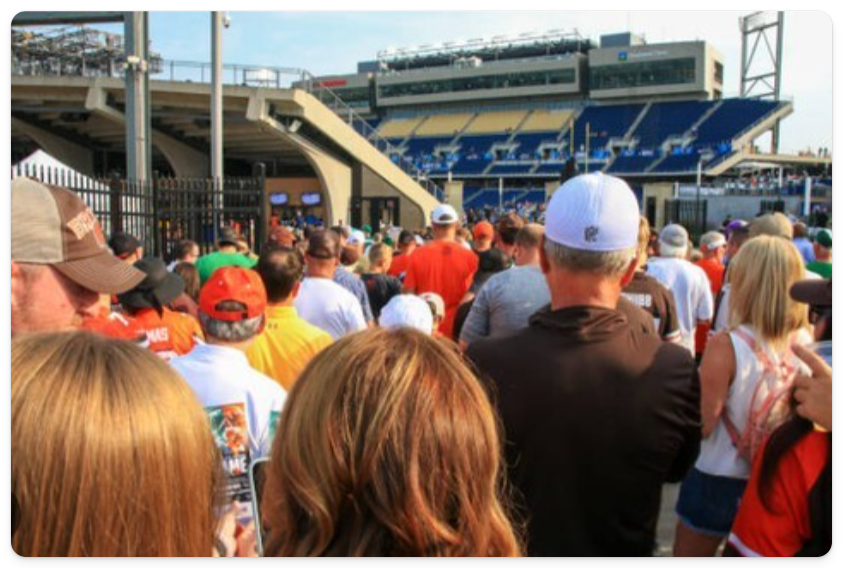
Crowd density is not just a logistics issue, it is a force multiplier for every other risk. Poor ingress/egress design, unclear communication, weather stress, alcohol consumption, and misinformation can rapidly escalate into panic, injury, or mass-casualty scenarios without any malicious actor involved.
History shows that crowd disasters are more often failures of planning, communication, and decision-making than failures of intent. Once panic begins, even well-trained security forces struggle to regain control.
What Readiness Actually Looks Like
This initiative is part of KCATA’s ongoing commitment to innovation, security, and service excellence. With SafeSpace Global technology in place, KCATA is setting a new standard for public transit safety ahead of one of the biggest global sporting events.
The vulnerability of major events is not a sign of weakness; it is a byproduct of scale. Success will not be measured by the absence of incidents alone, but by how quickly, quietly, and humanely systems respond when pressure inevitably arrives. The KCATA partnership demonstrates how proactive jurisdictions prepare for these predictable risk scenarios.
About SafeSpace Global Corp.
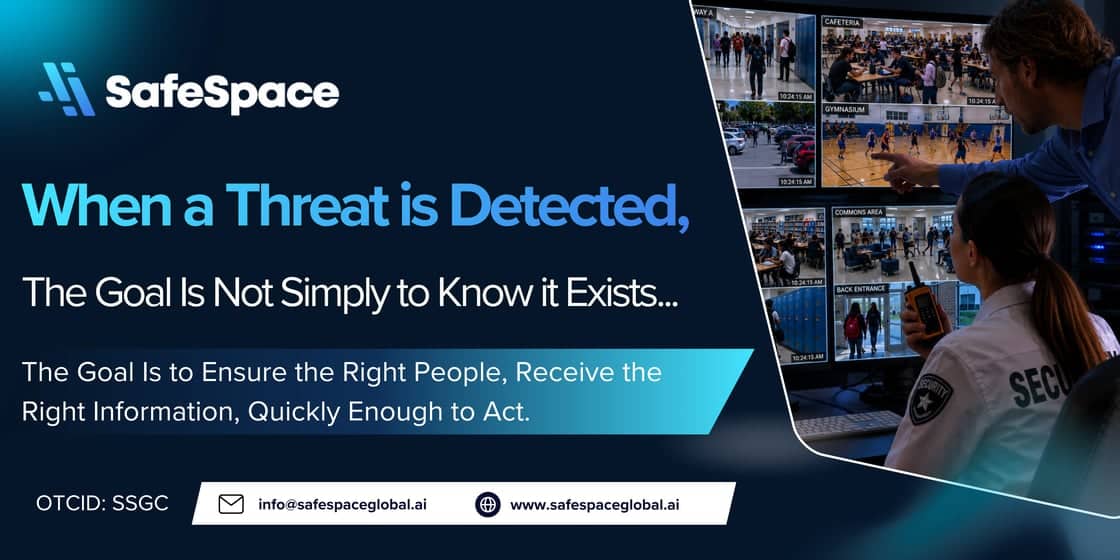
SafeSpace Global Corporation is an AI-powered platform that integrates video, audio, and sensor analytics to enhance situational awareness and support proactive safety measures. Incidents can unfold in seconds. By leveraging advanced technologies, SafeSpace provides instantaneous detection with real-time monitoring and live alerts, enabling security teams to respond swiftly to potential security threats before a situation becomes a crisis to help keep bus operators and riders safer.
By utilizing advanced AI monitoring tools, SafeSpace’s technology identifies potential threats before they escalate through cutting-edge facial recognition, brandished weapons detection, and assault detection monitoring. In addition, our AI technology continuously scans trusted sources across the web for real-time updates and actively monitors for missing children, senior citizens, and individuals on terrorist watchlists. When a match is detected, authorities are notified immediately, enabling faster, coordinated, and potentially life-saving responses.
To learn more, ask questions, or discuss how SafeSpace Global can help enhance safety for your transit system—contact our team to request a demo today.
Sources:
* SafeSpaceGlobal.ai
*https://ctc.westpoint.edu/protecting-major-sporting-events-from-terrorism-considerations-for-the-paris-olympics-and-
beyond/?utm_source=chatgpt.com