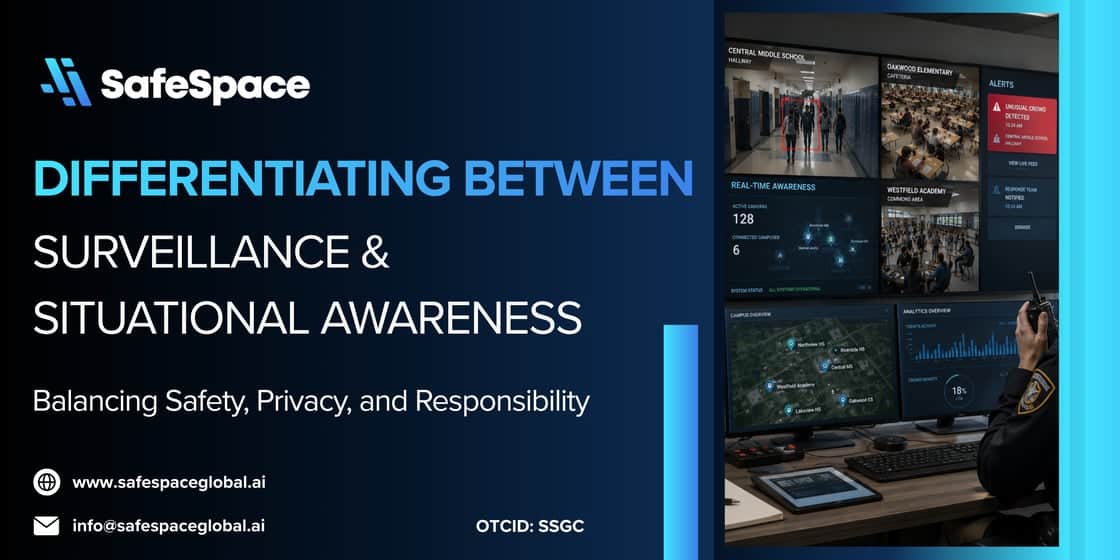
Differentiating Between Surveillance & Situational Awareness
One of the most important distinctions in today’s school safety conversation is the difference between surveillance and situational awareness. Surveillance watches. Situational awareness informs.
That distinction matters because modern AI-powered safety systems are not designed to monitor every student movement or create intrusive oversight environments. Their purpose is far more focused: detect specific, defined threat signatures: visible weapons, violent motion patterns, unauthorized access, or restricted individuals; and immediately notify the right people so they can respond faster and more effectively.
In practice, these systems function less like “watching students” and more like smoke detectors for emerging threats.
The Growing Reality of School Safety Threats
The reality facing school leaders today is difficult to ignore. According to the Centers for Disease Control and Prevention, firearms remain the leading cause of death for children and teens in the United States. More than 4,700 children and teens were killed by firearms in 2021 alone; that’s an average of more than 12 lives lost every day. Research from Everytown Research & Policy further reports that more than 349,000 students have experienced gun violence at school since the Columbine tragedy in 1999.
At the same time, threats inside schools are becoming more difficult to predict and faster to unfold. The National Center for Education Statistics reported that during the 2021–2022 school year:
- 67% of public schools recorded at least one violent incident.
- 19% reported student threats of physical attack without a weapon.
- 16% reported incidents involving possession of a weapon other than a firearm.
- Nearly 93% of schools controlled building access during school hours.
Schools are clearly investing in security infrastructure, but physical access control alone does not create real-time awareness.
The Operational Challenge Facing School Administrators
The operational challenge for administrators is straightforward: no principal, superintendent, school resource officer, or campus safety director can physically monitor every hallway, entrance, athletic field, parking lot, and campus perimeter simultaneously. Large districts may oversee dozens of campuses spread across miles of geography, often with limited staffing and growing expectations around emergency preparedness.
This is where AI-driven situational awareness changes the equation.
How AI-Powered Situational Awareness Works
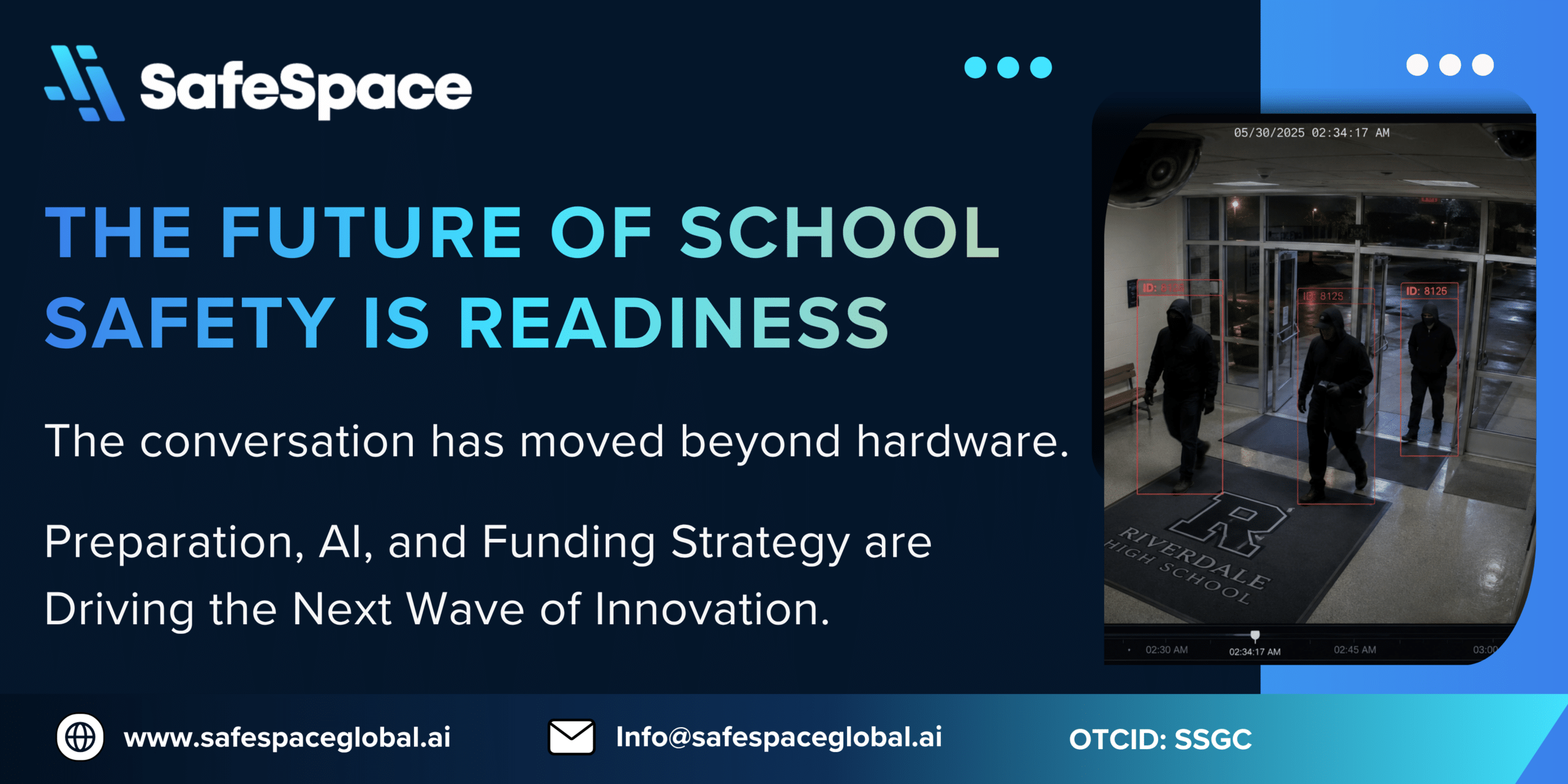
When integrated responsibly, AI safety platforms analyze existing camera infrastructure in real time and look only for predefined indicators of danger. The system does not “care” who a student is, what grades they make, or where they spend lunch. It is searching for objective safety anomalies: a visible firearm, unauthorized entry, violent motion, or an individual entering a restricted area.
The value is speed, and speed matters.
According to data published by the FBI, active shooter incidents are often over within minutes, many before law enforcement can arrive on scene. Industry testing and case studies from AI weapon detection providers report that some systems can identify a visible firearm and generate alerts in as little as 3–5 seconds after detection. In a crisis scenario, even a 30-second improvement in response time can significantly alter outcomes.
Equally important, situational awareness improves decision-making during chaotic events.
Without real-time intelligence, administrators often rely on fragmented eyewitness reports, delayed radio communication, text chains, or social media rumors. AI-assisted alerts can provide verified visual information, exact locations, and immediate notifications to designated personnel; allowing schools to respond based on facts instead of confusion.
How SafeSpace Helps Schools Respond Faster & Smarter
This is where SafeSpace Global provides a practical and scalable solution.
SafeSpace is built around the principle that schools need awareness, not invasive monitoring. Its AI-powered physical safety platform integrates with existing security infrastructure to help schools detect threats faster, improve emergency communication, and provide administrators with actionable real-time intelligence across their campuses.
Rather than relying solely on human observation, SafeSpace enhances visibility during critical moments by:
- Monitoring for predefined threat indicators such as weapons or unauthorized access.
- Delivering real-time alerts to designated administrators and security personnel.
- Supporting faster lockdown and emergency response coordination.
- Extending visibility across multiple campuses, after-hours events, and large facilities.
- Helping schools maximize existing camera investments without requiring entirely new infrastructure.
Importantly, SafeSpace’s platform is designed to support human decision-making; not replace it. With our human-in-the-loop, responsible implementation is an essential component of an effective school safety program.
Balancing Safety, Privacy, and Responsibility
Critics are right to raise concerns about privacy, false positives, and overreliance on technology. Those concerns deserve serious attention.
Still, dismissing all AI-enabled school safety systems as “surveillance” oversimplifies both the technology, and the responsibility school leaders carry every day.
Parents expect schools to know when danger enters a building. Teachers expect faster communication during emergencies. Administrators are expected to make life-critical decisions in seconds, often with incomplete information. Situational awareness technology exists to close that gap; responsibly, ethically, and with student safety at the center.
That is not surveillance.
That is responsible school leadership.
Sources:
Centers for Disease Control and Prevention (CDC) – Firearm Mortality Data
Everytown Research & Policy – Gunfire on School Grounds Database
National Center for Education Statistics (NCES) – Crime, Violence, Discipline, and Safety in U.S. Public Schools
FBI Active Shooter Reports & Resources